Reviving the Wankel Legend at Le Mans
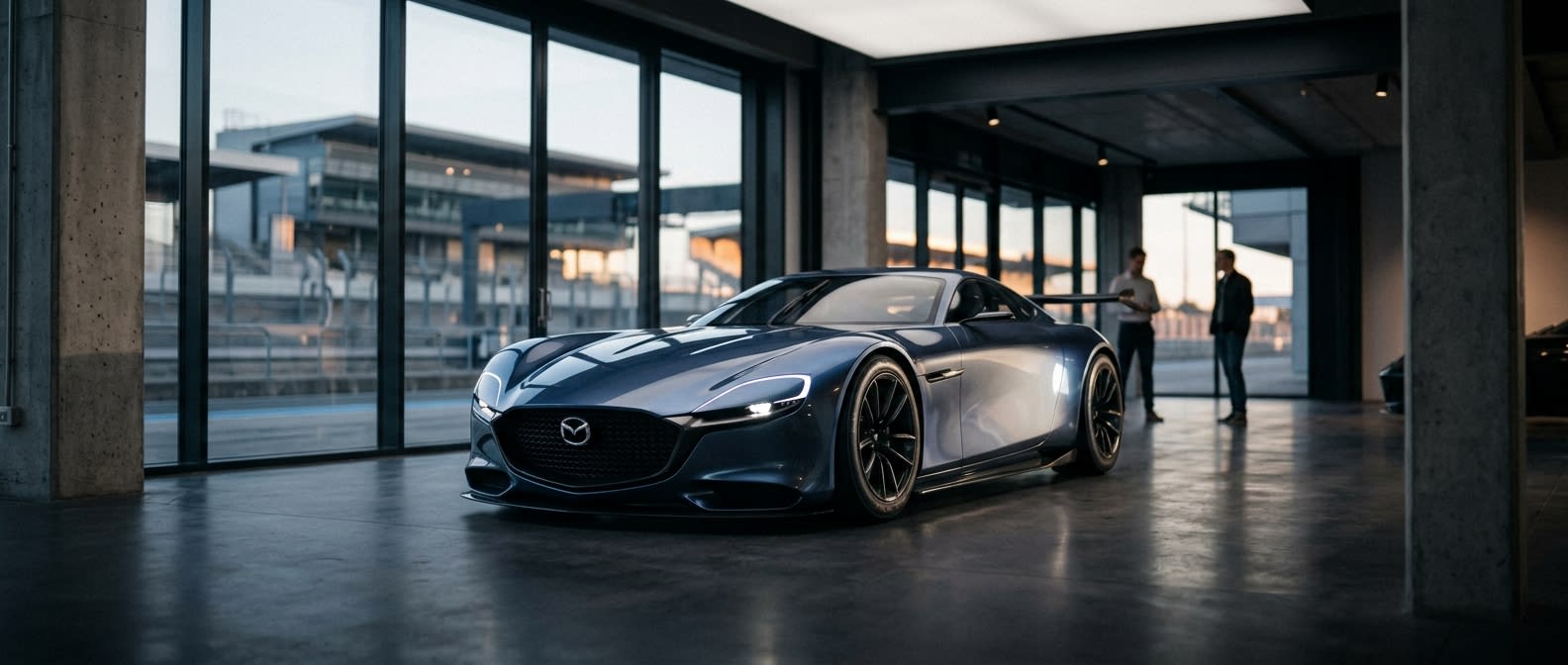

For automotive purists and engineering enthusiasts, few sounds are as evocative as the high-pitched, skull-piercing scream of a Mazda four-rotor engine. While the global automotive landscape pivots aggressively toward battery-electric propulsion and standardized piston configurations, Mazda remains the industry outlier, maintaining a stubborn, sentimental, and technically brilliant connection to rotary technology. This commitment to the Wankel engine is best exemplified by the legendary 787B, the machine that secured Mazda a historic victory at the 1991 24 Hours of Le Mans, marking a triumph that still resonates nearly 35 years later.
To ensure these pieces of rolling history do not fall into static museum displays, Mazda partners with Florida-based Flis Performance to maintain and campaign its heritage collection. Flis, the outfit responsible for the precision build of Mazda’s MX-5 Cup racers, recently offered a rare, intimate look at the meticulous teardown of the 787B’s heart, the R26B engine. For the technicians involved, this is not a standard service job; it is a high-stakes restoration of one-off components. Unlike a vintage piston engine where parts might be salvaged from donor vehicles, the internal architecture of the four-rotor engine is bespoke, requiring specialized knowledge and custom-manufactured solutions to keep the legendary endurance racer track-ready.
The technical complexity of the R26B reveals why Mazda’s engineers were considered the mavericks of endurance racing. Eschewing the conventional block and piston layout, the R26B functions as a multilayered assembly of aluminum housings, each containing a three-sided rotor that spins in a peanut-shaped chamber. By utilizing three spark plugs per housing, the engine was tuned to maximize thermal efficiency and combustion, enabling it to churn out 700 horsepower while screaming toward a 9,000-rpm redline. Though the car was capable of exceeding 10,000 rpm, Mazda’s race strategy favored endurance and reliability, ultimately allowing them to outlast the dominant Mercedes-Benz prototypes that faltered in the final hours of the 1991 event.
The significance of the 787B’s win extends far beyond the history books of Japanese motorsport. It remains a masterclass in risk management and strategic endurance. While the Mercedes entries were faster on raw pace, the Mazda team’s focus on long-term reliability and unconventional engineering allowed them to capitalize on the failures of their competitors. Today, this serves as a potent reminder for the modern industry: innovation is often found in the ability to refine "fringe" technology to the point of competitive dominance, rather than merely following the design trends of the mainstream majority.
For professionals in the automotive sector, the ongoing preservation of the 787B serves as a case study in brand identity. By maintaining these vehicles, Mazda fosters a visceral link to its engineering heritage that helps define its market position as a brand for the driver. Witnessing the careful disassembly of these engines underscores the reality that maintaining high-performance assets requires a bridge between traditional craftsmanship and modern precision. As the automotive world navigates a period of rapid technological shift, keeping a clear view of where we have been is essential for understanding where we are headed. Staying informed through the right data and analysis remains the most effective way for industry professionals to navigate these complex transitions with confidence.