The High Stakes Confirmation Battle for the Federal Reserve Chair
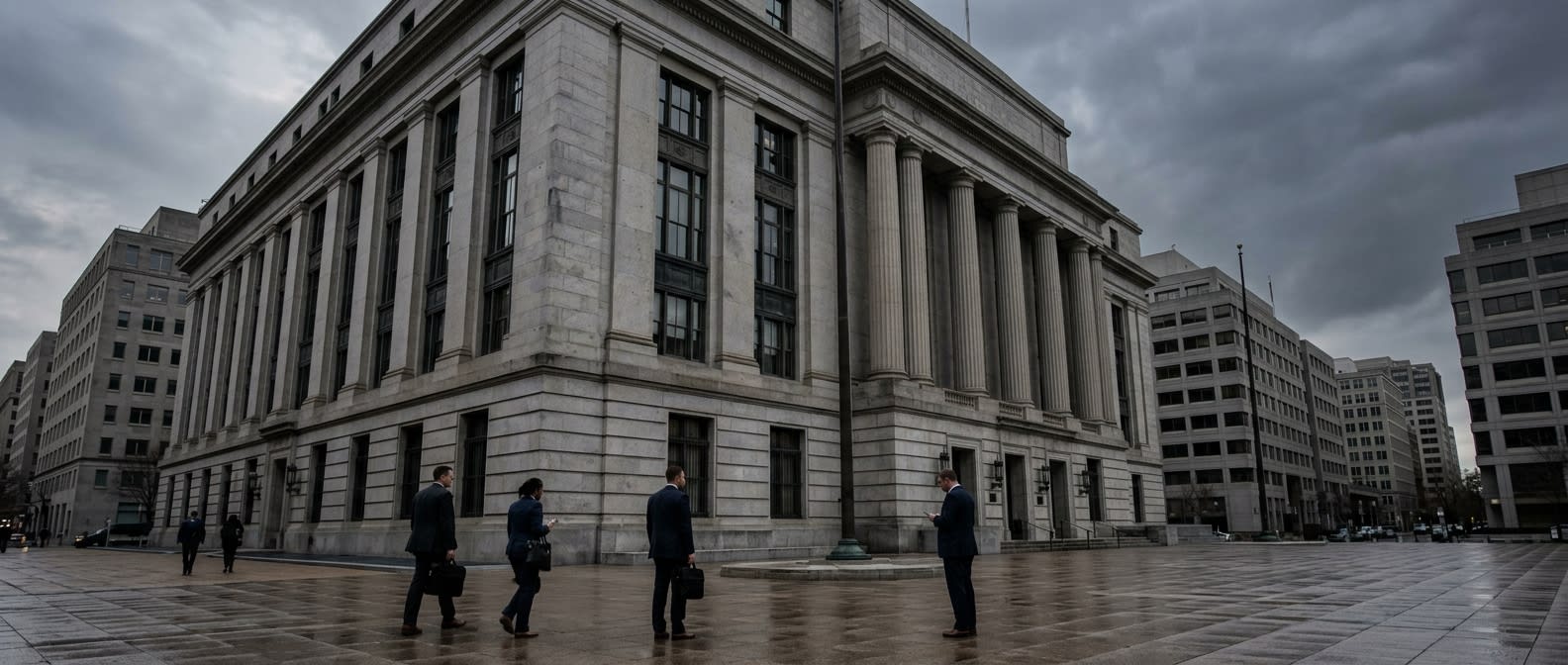

The nomination of Kevin Warsh to lead the Federal Reserve has ignited a firestorm in Washington, transforming a routine confirmation hearing into a complex political standoff. As the Senate Banking Committee begins its oversight of the nominee, it is becoming increasingly clear that the path to confirming a new central bank chair is fraught with obstacles that extend far beyond Warsh’s personal qualifications. The proceedings have exposed deep fractures regarding the autonomy of the institution, with the nomination process itself caught in a crossfire of administrative investigations, internal institutional pressures, and a fundamental debate over the scope of the Fed’s role in modern economic life.
One of the most unusual elements of this confirmation is the procedural blockade led by Senator Thom Tillis. The North Carolina Republican has pledged to withhold his support for the confirmation process until the Department of Justice ceases its investigation into the Federal Reserve and its outgoing chair, Jerome Powell. While the official justification for the investigation remains focused on budget overruns related to the renovation of the Fed’s headquarters, many observers view this as a strategic effort by the current administration to exert pressure on monetary policy decisions. This development underscores how sensitive the independence of the central bank has become, as political entities increasingly leverage oversight mechanisms to signal their desire for specific interest rate outcomes.
Beyond the procedural hurdles, Warsh’s own economic philosophy has come under intense scrutiny. A former Fed governor with a long-standing reputation as a monetary hawk, Warsh has recently pivoted toward a more accommodative stance, suggesting that productivity gains driven by artificial intelligence could allow the central bank to lower interest rates without reigniting inflation. This shift has drawn sharp criticism from lawmakers who fear that Warsh may be signaling a willingness to align Fed policy with the administration’s political agenda. The skepticism from members like Senator Elizabeth Warren highlights the ongoing tension between an executive branch that favors stimulative policy and a central bank that is statutorily required to maintain a neutral, evidence-based approach to price stability.
The broader implications for the economy are significant, as markets remain on edge regarding the direction of borrowing costs. Even if Warsh is confirmed, he will inherit an institution with a complex mandate and a 12-member committee that is currently hesitant to aggressively pivot on interest rates. Persistent inflationary pressures, recently exacerbated by geopolitical instability and rising energy prices, create a difficult environment for any leader seeking to fulfill the promise of lower rates while simultaneously keeping the economy from overheating. The challenge for the next chair will be to maintain market confidence while navigating a divided board that remains deeply wary of inflationary risks.
Furthermore, Warsh has signaled an intent to narrow the Fed's focus, arguing that the institution has historically strayed too far into political debates surrounding climate change and social inclusion. This approach signals a potential return to a more traditional, minimalist central banking model that prioritizes institutional restraint over expansive policy interventions. For professionals in the financial sector, this represents a potential sea change in how the Fed communicates its priorities and interacts with the broader economy. A shift toward a smaller footprint could lead to more predictable, rules-based policy, yet it also risks alienating stakeholders who have grown accustomed to the Fed’s more proactive engagement on social and environmental issues.
As the confirmation fight continues, the primary concern for the business community remains the preservation of the Fed’s institutional integrity. The central bank has historically served as the bedrock of economic stability precisely because it operates outside the immediate political fray. Whether Warsh or any other candidate can successfully balance the demands of the executive branch with the need for non-partisan monetary policy remains the defining question of this transition. Navigating these volatile shifts in policy and leadership requires a sophisticated understanding of the evolving regulatory landscape, a task made significantly easier by leveraging advanced analytical tools and AI-driven insights to monitor central bank discourse and macroeconomic trends.