SpaceX Entry into Nasdaq-100 Signals Heightened Index Divergence
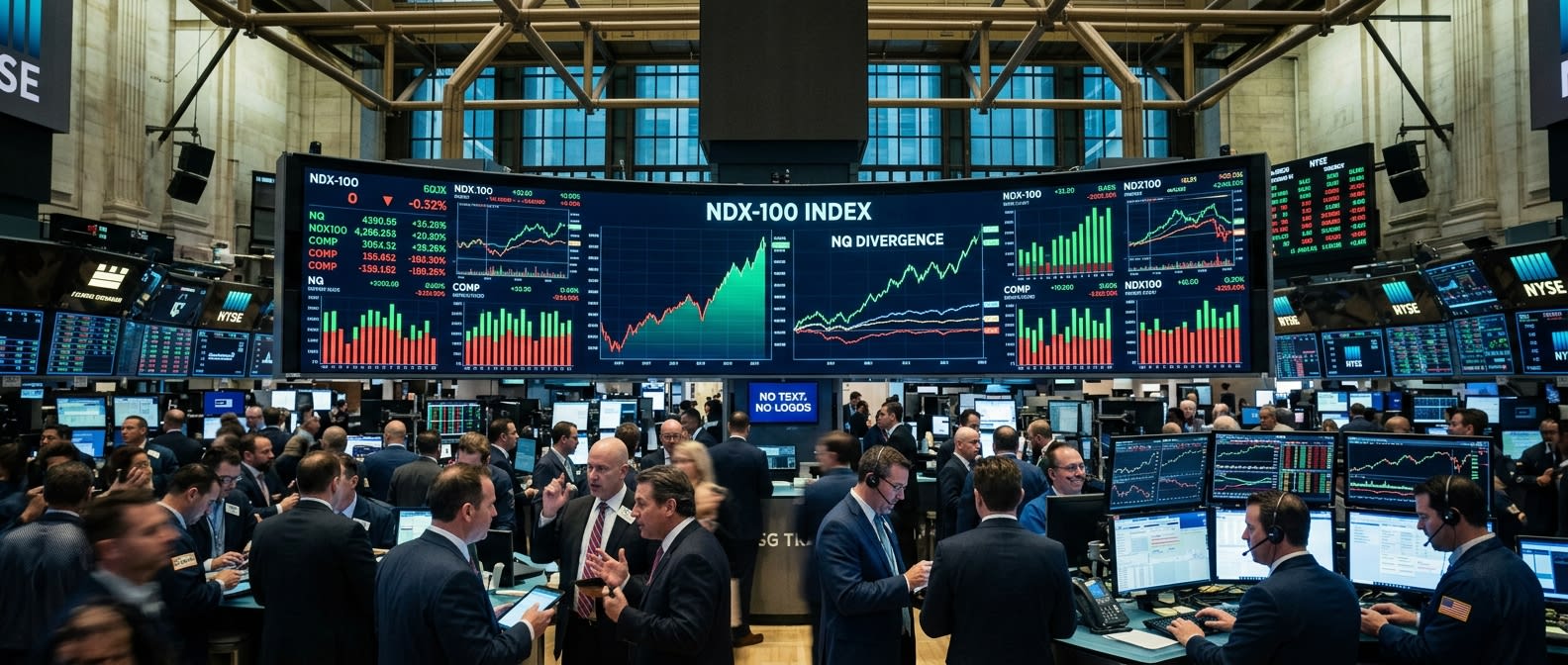

The landscape of major market indices is poised for a significant shift this Tuesday as SpaceX officially joins the ranks of the Nasdaq-100. This milestone represents a transformative moment for the index, integrating one of the world's most influential private-to-public technology entities into a basket already dominated by high-growth, high-beta companies. However, the move has reignited debates among analysts regarding the widening chasm between the Nasdaq-100 and the S&P 500, particularly concerning their respective risk profiles and susceptibility to market turbulence.
While the Nasdaq-100 has moved aggressively to capture the momentum surrounding space exploration and aerospace innovation, the S&P 500 remains governed by a more stringent set of inclusion criteria. Currently, regulatory and structural hurdles mean that SpaceX will not be eligible for S&P 500 consideration for at least another twelve months. This creates a temporary but significant bifurcation in how institutional portfolios are impacted by the aerospace giant’s performance. Investors who track these benchmarks closely will likely see the Nasdaq-100 take on a more pronounced, aggressive character compared to the more diversified and cautious S&P 500.
The inclusion of SpaceX acts as a catalyst for what many economists describe as an inevitable volatility spread. The Nasdaq-100 has historically exhibited higher beta than the S&P 500, meaning it tends to react more violently to macroeconomic shifts, interest rate changes, and sector-specific news. By adding a company that is frequently subject to speculative fervor and complex capital-intensive operations, the Nasdaq-100 is essentially doubling down on its identity as a growth-heavy, high-risk index. This contrast is expected to weigh heavily on fund managers who use these indices as mirrors for their broad market exposure.
From an industry perspective, this development highlights the growing influence of non-traditional technology firms on public markets. As companies like SpaceX push the boundaries of satellite communications and logistics, they bring unique operational risks that do not always align with the legacy tech giants currently anchoring the Nasdaq. This infusion of new blood into the index might provide higher upside potential during bull runs, but it arguably increases the concentration risk for retail and institutional investors who rely on index funds as a way to achieve steady, moderate growth.
For those overseeing portfolios, the divergence suggests that a one-size-fits-all approach to index investing may no longer be sufficient. The distinct regulatory paths for index entry mean that market participants must now be more tactical in their allocations. If the gap in volatility continues to widen, the S&P 500 may be viewed increasingly as a bedrock for stability, while the Nasdaq-100 is treated more like a tactical instrument for capturing the rapid expansion of the next frontier of high-tech capital.
Ultimately, this index reshuffling is a reminder that the composition of the market is never static and that passive strategies are increasingly influenced by the specific inclusion rules of individual benchmarks. As institutional capital flows into these shifts, the pressure on benchmarks to balance innovation with historical risk management will only intensify. Staying informed through the integration of sophisticated analytical tools and AI-driven predictive insights remains a vital strategy for professionals navigating these complex financial environments.